
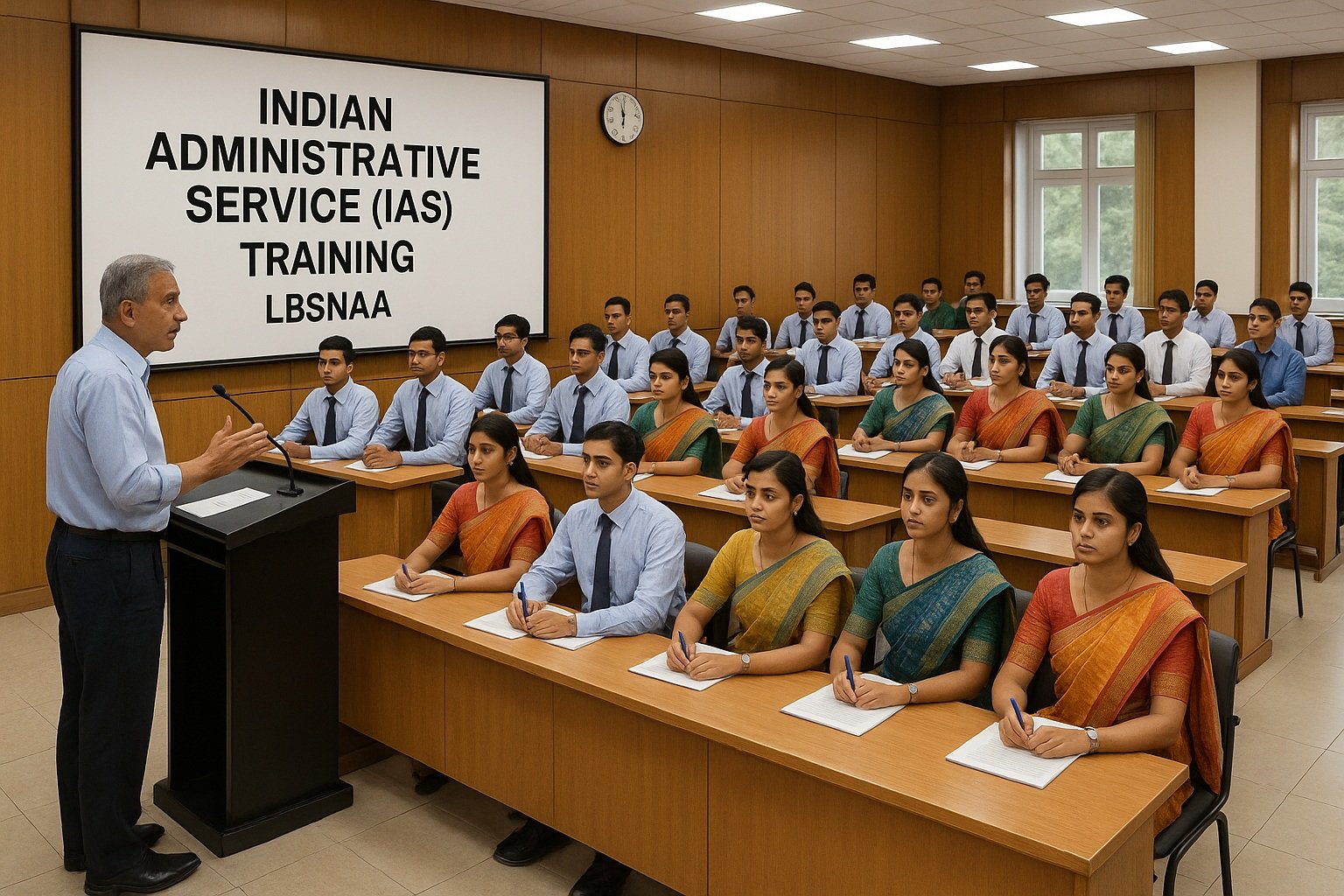
The Indian Administrative Service (IAS) is one of the most prestigious and sought-after civil services in India. Known as the backbone of the Indian administration, IAS officers play a pivotal role in policy implementation, governance, and driving socio-economic change. They are entrusted with maintaining law and order, managing development projects, and ensuring that the policies of the government reach the people at the grassroots level.
In this blog, we’ll explore who IAS officers are, their roles and responsibilities, the process of becoming an IAS officer, famous examples, and why they are so vital to India’s growth.
What is the IAS? 📌
The Indian Administrative Service (IAS) is one of the three All India Services, along with the Indian Police Service (IPS) and the Indian Forest Service (IFS). It was established in 1946, replacing the colonial-era Indian Civil Service (ICS).
IAS officers are recruited through the Civil Services Examination (CSE) conducted annually by the Union Public Service Commission (UPSC). It is considered one of the toughest exams in the world due to its vast syllabus, multi-stage process, and intense competition.

Roles and Responsibilities of an IAS Officer 🏛️
IAS officers serve in a wide variety of roles, ranging from district-level administration to top positions in the central government. Their key responsibilities include:
- Policy Implementation
- Ensuring that government schemes and laws are executed effectively.
- District Administration
- Acting as District Magistrate (DM) or Collector, managing law and order, revenue collection, and development programs.
- Disaster Management
- Handling crises such as floods, earthquakes, and pandemics.
- Budget and Development
- Overseeing financial planning, allocation of resources, and monitoring government projects.
- Advisory Roles
- Serving as policy advisors to state and central governments.
- Representation Abroad
- Some IAS officers serve in international organizations like the UN or World Bank.
How to Become an IAS Officer 📚
Becoming an IAS officer is a dream for millions of Indian aspirants. The journey requires dedication, discipline, and determination.
1. Eligibility Criteria
- Minimum age: 21 years
- Educational qualification: Graduate degree in any discipline
- Nationality: Indian citizen
2. UPSC Exam Process
The Civil Services Exam is a three-stage process:
- Prelims: Objective-type screening test
- Mains: Descriptive written exam (9 papers)
- Interview/Personality Test: Final round to test analytical ability and personality
3. Training at LBSNAA
After selection, candidates undergo training at the Lal Bahadur Shastri National Academy of Administration (LBSNAA), Mussoorie, where they are prepared for the challenges of public service.
Famous IAS Officers in India 🌟
Over the years, several IAS officers have become well-known for their contributions:
- T.N. Seshan – Former Chief Election Commissioner, known for electoral reforms.
- Kiran Bedi – Though an IPS officer, she worked closely with IAS counterparts in police-administration coordination.
- Armstrong Pame – Known as the “Miracle Man,” built a road in Manipur with public support without government funding.
- S. R. Sankaran – Popularly known as “People’s IAS officer” for his dedication to social welfare.
These examples showcase how IAS officers can bring real change at the grassroots level.
Why IAS Officers are Vital for India 🌍
IAS officers are not just administrators—they are leaders who ensure India functions smoothly at every level. Here’s why they are so important:
- Bridge Between Policy and People – They act as the link between the government and citizens.
- Crisis Managers – From COVID-19 to natural disasters, IAS officers lead from the front.
- Nation Builders – Their decisions impact education, health, infrastructure, and governance.
- Guardians of Law and Order – As District Magistrates, they maintain peace and harmony.
Challenges Faced by IAS Officers 💡
While the IAS is highly prestigious, it comes with challenges:
- Political Pressure – Officers often face interference from politicians.
- Work-Life Balance – Demanding schedules make personal life challenging.
- Public Expectations – Citizens expect immediate solutions to problems.
- Risk & Responsibility – A single wrong decision can affect millions.
Future of IAS in India 🚀
With the rise of digital governance and AI-driven administration, the role of IAS officers is evolving. Future IAS officers will need to be:
- Tech-savvy
- Transparent and accountable
- Adaptable to fast-changing governance models
- Strong advocates of sustainability and climate action
Conclusion ✅
IAS officers of India are not just government employees; they are leaders, managers, and nation-builders. They carry immense responsibility on their shoulders and are instrumental in shaping the country’s present and future.
For aspirants, becoming an IAS officer is more than securing a prestigious job—it is about serving the nation selflessly and leaving a legacy of positive change.
📸 Suggested Reference Images (Free Sources: Unsplash / Pexels / Pixabay)
- Indian Administrative Service (IAS) training at LBSNAA.
- Government building or Parliament of India.
- A District Magistrate’s office.
- Young aspirants studying with books/laptops.
- Indian flag with administrative theme.